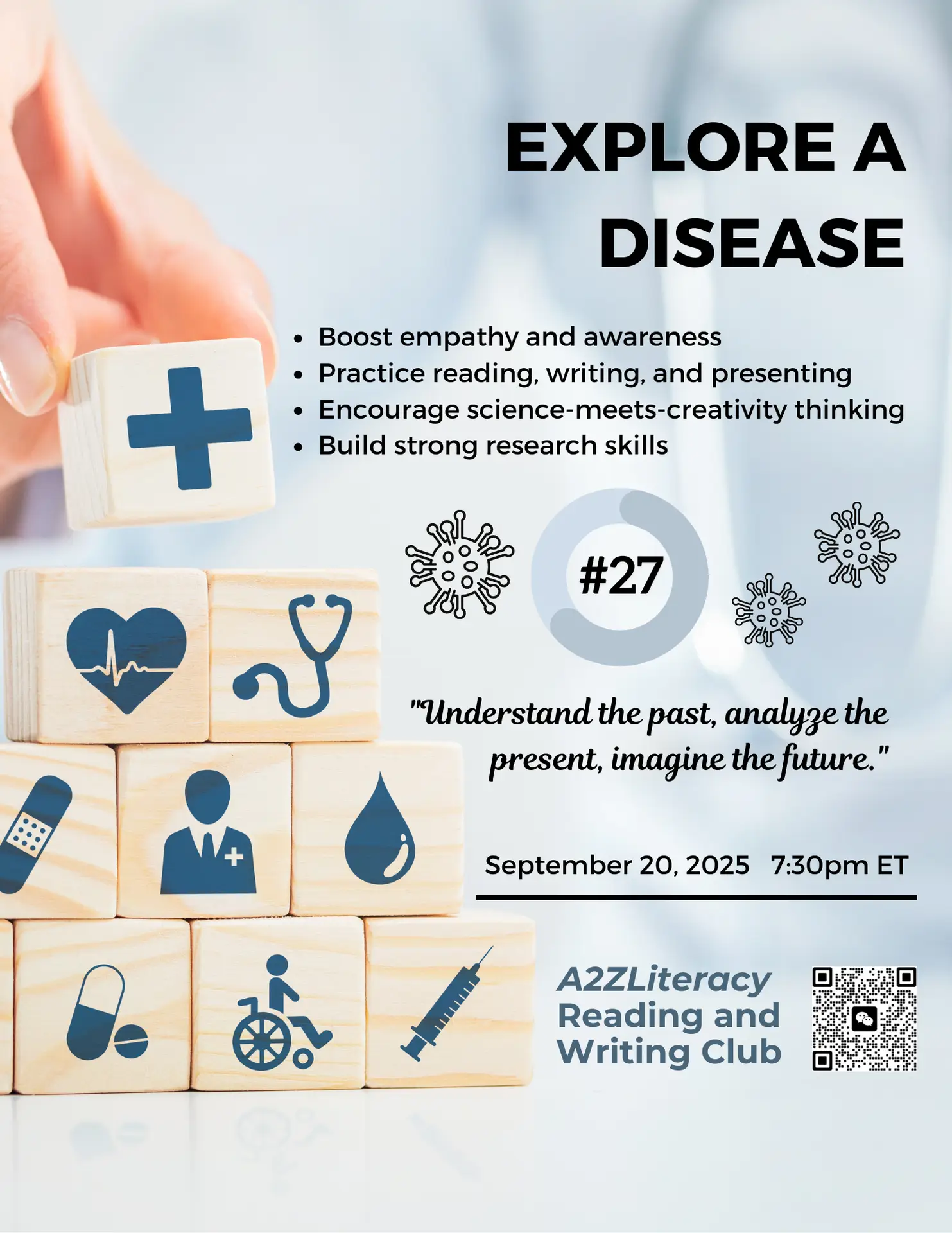
7:30pm on September 20, 2025 ET
Quote
“Research is to see what everybody else has seen, and to think what nobody else has thought.” – Albert Szent-Gyorgyi
Project Goals
– Boost empathy and awareness
– Practice reading, writing, presenting
– Encourage science-creativity thinking
– Build strong research skills
Requirements
“Understand the past, analyze the present, imagine the future.”.
Select a disease and explore these key aspects (symptoms, causes, treatments, history & facts, book connections, future outlook)
Highlights/Important Information
Nine participants share various disease information.
Additional Topic
Invite guest speack Dr. Lei Quan to the meeting to share his knowledge and experience.
We look forward to learn from our participants and guest speaker!
Remarks
The tem members presented on various medical conditions including lymphoma, chickenpox, HIV, COVID-19, epilepsy, diabetes, type I diabetes, Ebola and malaria. Dr. Lei Quan joined as a guest speaker to provide feedback on the presentations and offer guidance on research topics, emphasizing the importance of developing critical thinking skills and logical reasoning for students pursuing medicine. The conversation ended with discussions about leadership opportunities, communication skills, and strategies for students interested in pursuing medical careers, including various paths beyond becoming a doctor.
Special Learning from Dr. Lei Quan
Research Presentation Guidance on Diseases
Lei provided guidance to students on their research presentations about various diseases. Key recommendations included focusing on milestones, diagnosis methods, treatment options, and prevention strategies for topics like B cells and lymphoma, chickenpox, HIV, COVID-19, epilepsy, diabetes, and Ebola. Lei emphasized the importance of including future implications and potential hypotheses for each disease, suggesting students consider aspects like diagnosis, treatment, and prevention at different stages of the diseases.
Enhancing Medical Students’ Thinking Skills
Lei emphasized the importance of developing thinking skills and logical reasoning rather than just memorization for students pursuing medicine. He explained that education progresses from one-dimensional learning in elementary school to two-dimensional in middle school, and three-dimensional in high school, suggesting students should expand their cognitive capacity to handle more complex information. Lei also advised students to develop well-rounded skills beyond academics, though he did not elaborate on specific qualities to cultivate.
Leadership and Communication for Success
Lei discussed the importance of leadership, communication skills, and teamwork spirit for high school students preparing for medical school. Amanda provided examples of leadership opportunities like debate teams and student councils, while Lei emphasized that leadership doesn’t require formal titles and can be demonstrated at home. The discussion highlighted the critical role of communication skills in both high school and medical settings, with Lei noting that Asian students sometimes struggle with interviews despite strong academic records. Lei also encouraged participation in contact sports to develop teamwork skills and stressed the importance of problem-solving skills beyond academic memorization.
Pathways to Medical Career Exposure
Amanda and Lei discussed opportunities for students to gain exposure to medicine beyond hospital volunteering. Lei suggested applying early to hospital programs, exploring nursing homes and facilities for disabled patients, and participating in care for patients with chronic diseases as valuable experiences. They also addressed the challenges of becoming a licensed doctor, with Lei highlighting the need for excellent academic performance, high MCAT scores, and strong soft skills, noting the highly competitive nature of the process.
Medical Career Paths and Preparation
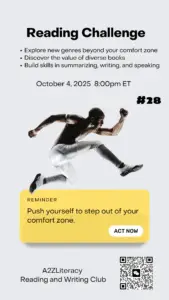
Dr. Lei Quan discussed strategies for students pursuing medicine, emphasizing the importance of early preparation and non-academic performance. He highlighted various career paths in the medical field beyond becoming a doctor, including government positions, pharmaceutical and biotech companies, teaching, and research. Dr. Lei Quan also explained the challenges in medical school admission rates, using Boston University as an example to illustrate how few students progress to apply for medical school. The conversation ended with Amanda announcing the next session’s topic, which focuses on stepping out of one’s comfort zone to explore diverse genres and build skills in summarizing, writing, and speaking.